Buying, moving and installing a heavy safe
A safe is built to be hard to move, so plan the route, the floor and the anchor before it arrives.
October 6, 2026 · 4 min read
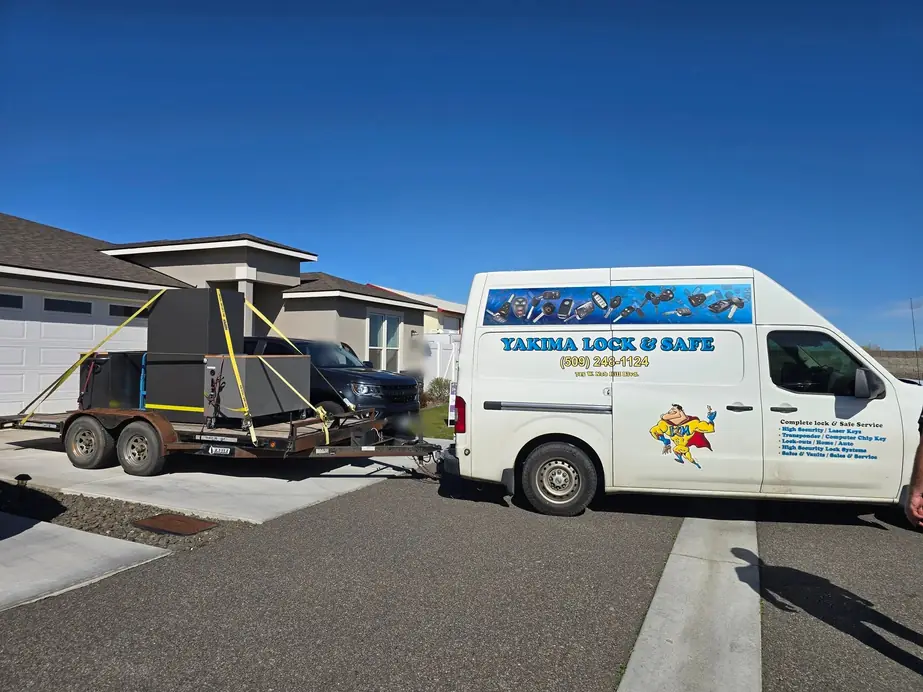
A safe is one of the few things in a home or shop that's built to be hard to move, and then somebody has to move it anyway. Buying one, getting it inside, and setting it where it will live is a different job from carrying in a television. Get it wrong and you can end up with a hurt back, a damaged floor, or a safe that's easy for someone else to haul away.
Decide what the safe is for
Start with what you're protecting. Papers, cash and jewelry face different dangers than long guns or a drive full of backups. Most safes are better at one job than another.
Fire safes are built to keep the inside from getting too hot for paper or media for a stated length of time. Burglary-resistant safes are built to hold up against tools. A heavy, thick-walled safe can offer some of both, but a light box sold as a fire safe won't stop a determined person with a pry bar. Ratings are test results under set conditions, not promises about every fire or every break-in, so read what the rating actually says.
Weight, floors and where to put it
Safes are heavy, and a bigger one is very heavy. Before delivery day, decide where it's going and check the path to get there. Measure the doorways and the turns in the hall. Look at the steps, the thresholds and any tight corners. A safe that fits through the front door can still get stuck at a stairwell.
A good spot is out of sight, on a solid floor, usually on the ground level. A corner is often better than the middle of a wall, because it leaves a thief less room to work a pry bar. Wood floors on an upper level and older subfloors may not be built for that much weight in one place. If you can't tell, ask before the safe gets there.
Bolting it down
A safe that can be carried off is just a locked box someone else gets to open later. Many safes have holes in the base so you can anchor them to a concrete slab or a solid floor. Anchoring matters most with smaller and mid-weight safes, which are the ones a couple of people with a dolly can load into a truck.
Moving a safe without hurting anyone
Safes move with dollies, ramps, straps and enough hands, and they move with a plan. They don't move by being tipped end over end by two friends on a Saturday. A heavy safe gets top-heavy on a dolly, the door can swing open, and the weight shifts the moment it meets a slope or a step.
- Clear the route and lay down floor protection before the safe is anywhere near the door.
- Measure the safe, the doorways and the corners, and add up the turns.
- Lock the door and make sure the handle can't move before it goes anywhere.
- Strap it to the dolly, and never let the safe lean on the people.
- Plan for stairs with extra help and the right equipment, or find another route.
- Tell everyone where to stand and what to do if the load starts to tip: get out of the way.
Yakima Lock & Safe lists safes and vaults, sales and service, and it moves and installs safes. The shop's Facebook page shows its van pulling a flatbed trailer with three heavy safes strapped down at a customer's new house. That's the kind of job to hand to people with the right equipment, instead of a borrowed truck and a few friends.
Locks, combinations and service
Safes come with dial combination locks, electronic keypads or key locks. A dial doesn't need batteries but takes some practice. A keypad is fast, but it needs fresh batteries and a plan for when they die. Whichever you pick, write the combination or code down and keep it somewhere other than inside the safe.
Combinations can be changed, and safes can be worked on when a lock sticks, a dial won't turn right, or you've inherited one and don't know the combination. Yakima Lock & Safe says it works on safes of all sizes and types, and combinations changed is on its commercial list.
Questions to settle before delivery day
- What will go in the safe now, and what might go in later?
- Where will it sit, and what is the route from the truck to that spot?
- Can the floor under that spot carry the weight?
- Will it be anchored, and to what?
- Who knows the combination, and where is it written down?
- Do you want the old safe moved out as part of the job?
If you're buying, moving or installing a safe in Yakima, call Yakima Lock & Safe at (509) 248-1124 or stop by the shop at 715 W Nob Hill Blvd. Bring the measurements, the spot you have in mind, and a photo of the route.
Yakima Lock & Safe, (509) 248-1124
Call (509) 248-1124More articles
When the car won't start, it might be the key
Before you replace the battery or the starter, find out whether the car still recognizes your key.
Rekey or replace the locks after you move into a Yakima home
Nobody can tell you how many copies of the old keys are still out there, so deal with it before you unpack.